
Tired of being ghosted by a landlord, a flaky contractor, or an ex-friend who owes you money? It is no news that, right now, the everyday consumer has been feeling powerlessness against debt. Many people assume that taking legal action requires an expensive attorney and thousands of dollars in consultation fees, so they simply walk away from money that is rightfully theirs.
However, the legal landscape has shifted. You don’t need a law degree to force someone to take you seriously. A small claims demand letter app provides some “legal power” needed to move a dispute from an ignored text message to a formal legal process. Often, receiving a professional, stamped document in the mail is all it takes to get paid without ever stepping foot in a courtroom.
- Are you owed a refund? Download this free bank fee refund app
- 10 Legal Apps Lawyers Swear by for Success
- Legalized Company Checker in the USA Online
Where to find the small claims demand letter app
The most prominent tool in this space is DoNotPay, often referred to as “The World’s First Robot Lawyer”.
This app was designed specifically to empower citizens to handle everyday disputes—like recovering security deposits or suing for poor service—without the high cost of traditional legal representation.
Available for iOS and Android, the app acts as a small claims demand letter app that has already helped over 250,000 people recover owed funds.
By using standardized templates that are legally valid in all 50 states, it saves users an average of $300 in initial attorney fees.
- Key feature: instant generation of formal demand letters and small claims court filing assistance.
- Success rate: highly effective as a “tripwire” to resolve debts before they reach trial.

Step-by-step guide to creating a demand letter
Using a small claims demand letter app is designed to be a “frictionless” experience. You don’t need to know legal jargon; you just need to know the facts of your case.
Step 1: input the details
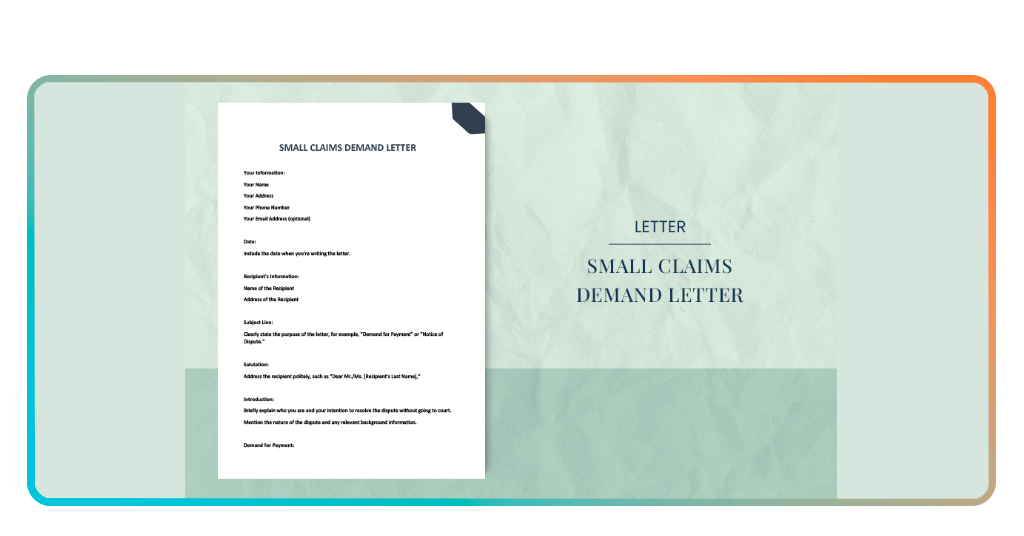
Open the app and select the “Small Claims” or “Demand Letter” tool. You will be asked a series of simple questions: Who owes you money? How much? Why?
Step 2: evidence upload
You can attach digital evidence such as screenshots of ignored messages, photos of property damage, or unpaid invoices.
Step 3: automatic generation
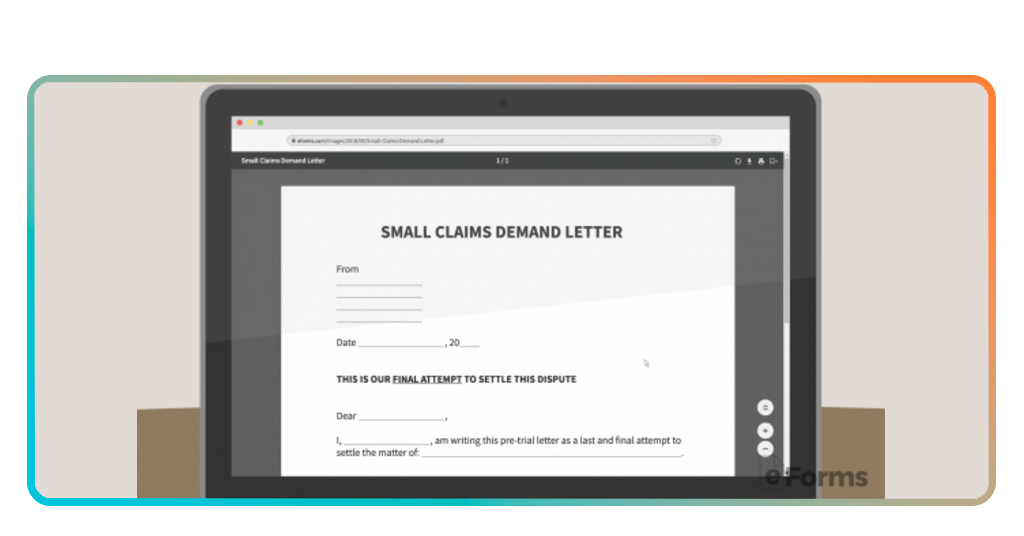
The app’s AI synthesizes this data into a professional, formal letter that cites relevant state laws and statutes.
Step 4: the “ultimatum”
The letter clearly states a deadline (usually 10-14 days) by which the debt must be paid to avoid further legal action in small claims court.
Why you should look for legal protection
While a single letter can solve many problems, the reality of 2026 is that digital and financial disputes are becoming more frequent.
This is why many users transition from using a free small claims demand letter app to a full legal subscription service.
To Citizens Advice, deciding whether to make a claim involves weighing the time and effort against the potential recovery. Having ongoing legal protection means you have a “champion” in your pocket for:
- Landlord-tenant disputes: recovering security deposits or forcing essential repairs;
- Contractor conflicts: dealing with unfinished work or overcharging;
- Corporate complaints: fighting back against hidden fees from big tech or insurance companies.
Having a “Robot Lawyer” subscription provides a sense of security, knowing that you can generate a “scary” legal document the moment someone tries to take advantage of you.
How to submit your demand letter
Once the small claims demand letter app generates your document, you have two main options for delivery:
The “self-serve” method
You can download the PDF and send it yourself. It is highly recommended to send this via Certified Mail with Return Receipt Requested.
This provides you with a physical “Proof of Service” that can be used as evidence in court to show that the defendant received the warning and chose to ignore it.
The automated send
Many professional apps offer a service where they handle the mailing for you. They will print, stamp, and mail the letter through the official postal service, providing you with tracking information directly within the app interface.
What happens next?
In a large percentage of cases, the “Champion Pattern” works: the debtor realizes you are no longer just “asking” and are now “filing”.
If they still refuse to pay, the app can then help you generate the actual court forms required to sue them in Small Claims Court, guiding you through the local rules of your specific jurisdiction.
The “paper trail” advantage
In modern financial disputes, the medium is often the message. Relying on casual “handshake” agreements or informal text messages creates a significant tactical disadvantage.
While these methods are free, they are almost universally ineffective against someone determined to ignore their obligations.
When a conflict remains in the realm of informal messaging, it is characterized by emotional language and is easily dismissed or “ghosted” by the debtor.
Professionalism and legal fear
In contrast, utilizing a small claims demand letter app shifts the dynamic from a personal plea to a professional requirement.
By adopting a formal legal tone, the document signals that the sender is prepared to move beyond conversation into litigation.
Experts call it “Legal Fear”—the realization by the debtor that the costs of ignoring the debt (court fees, public records, and time) now outweigh the cost of simply paying what is owed.
Admissibility
One of the most critical differences between a standard text and a generated demand letter is its standing in a courtroom. A professionally drafted letter, sent via certified mail, serves as court-admissible evidence.
It proves to a judge that you acted in “good faith” by providing the defendant with a final opportunity to resolve the matter before involving the state
Final thoughts
Chasing a debt manually may seem like the cheapest route. In practice, it often leads to zero recovery and weeks of lost time, making it the most expensive option in indirect costs.
A dedicated app offers a practical middle ground. Whether through a free generator or a low-cost subscription, it can deliver structured, legally sound documents without the need for a $300-per-hour attorney consultation.
For many users, that balance of affordability and authority makes recovering funds faster and more realistic.